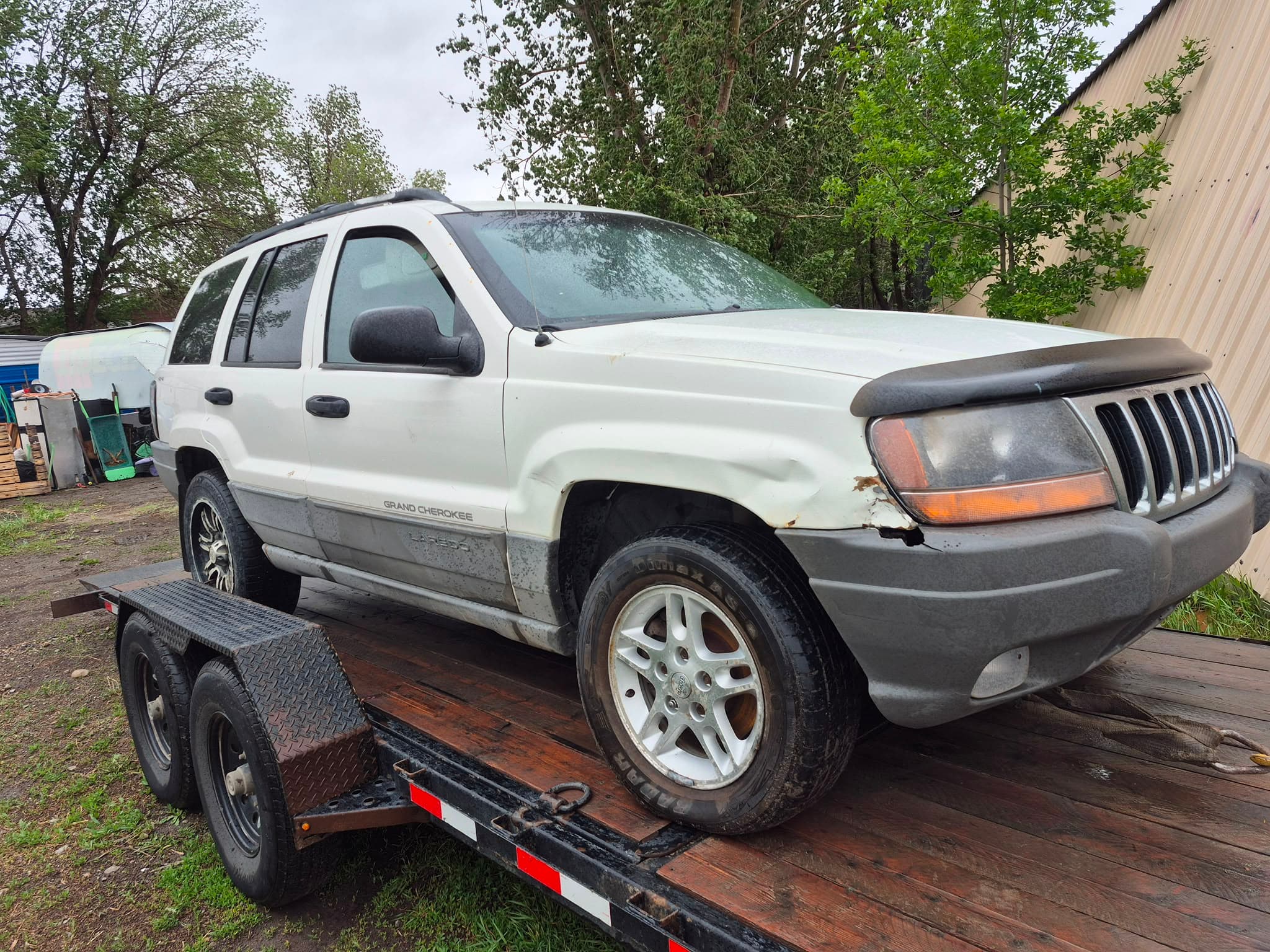
The flatbed pulls away from your driveway and your old car disappears down the street. For most people, that's where the story ends. But the vehicle you just sold is about to go through a surprisingly sophisticated industrial process - one that's regulated, environmentally monitored, and considerably more thorough than "it gets crushed."
Knowing what happens next serves two practical purposes. It tells you whether the buyer you chose is operating legitimately, and it explains exactly where the money you were paid came from.
Arrival and Deregistration
Your vehicle is delivered to a licensed auto recycling facility. In Alberta, these operations fall under provincial business regulations and environmental standards - they can't legally process vehicles otherwise.
The first thing that happens is administrative. The VIN is recorded, ownership documentation is verified against the Alberta registry, and the vehicle is formally deregistered. This step matters to you directly: it's the official record that the car is no longer your responsibility.
This is also why every legitimate buyer insists on seeing your registration. A facility can't deregister a vehicle it can't prove ownership of, which is covered in more detail in the step-by-step cash for cars process.
De-pollution: The Stage That Legally Comes First
Before a single bolt is removed, every hazardous fluid must be drained and handled according to Alberta environmental requirements. This is the most regulated part of the entire operation.
Engine oil is recovered and sent for re-refining. Transmission fluid, brake fluid, and power steering fluid are drained into sealed containment. Coolant is captured - ethylene glycol is toxic and cannot enter storm drains. Remaining fuel is siphoned and either reused or disposed of through licensed channels.
Air conditioning refrigerant gets special treatment. Venting refrigerant to atmosphere is illegal under federal Canadian law, so it's recovered using dedicated equipment before the AC system is touched.
Tires come off at this stage too and enter Alberta's tire recycling stream, where they're processed into rubber crumb for playground surfacing, athletic tracks, and road construction aggregate. The battery is removed and sent to a lead-acid recycler - one of the most efficiently recycled products in existence, with recovery rates above 95%.
A facility skipping these steps isn't cutting a corner. It's breaking the law.
Parts Harvesting: Where Your Payout Came From
Once de-polluted, the vehicle is assessed for salvageable components. This is the stage that generates most of the value a buyer was able to pay you.
Technicians pull anything with a resale market:
- Engines and transmissions, including partially functional units purchased by rebuilders
- Catalytic converters, containing platinum, palladium, and rhodium
- Alternators, starters, fuel pumps, and compressors - consistently high-demand items
- Body panels, doors, hoods, and bumpers for collision repair shops across Calgary
- Glass, mirrors, and lighting assemblies
- Seats, dashboards, and interior trim for restoration work
- Wheels and rims in serviceable condition
- Electronic modules and wiring harnesses
These go into inventory and are sold to independent mechanics, body shops, and DIY owners throughout Calgary and southern Alberta. Recycled OEM parts typically cost a fraction of new equivalents, which is why the demand never really softens.
This is the direct answer to a question a lot of people have: how can a buyer pay real money for a car that doesn't run? Because the engine failing has no bearing on whether the alternator, the doors, or the catalytic converter still have buyers. It's the same reasoning explained in selling a non-running car in Calgary.
Crushing and Shredding
What remains after parts extraction is essentially a hollow steel shell. It goes to a hydraulic crusher, which compacts it into a dense block for efficient transport, then on to an industrial shredder.
Shredders reduce the compacted vehicle to fist-sized fragments. From there, separation technology takes over. Magnets extract ferrous metals - the steel and iron. Eddy current separators pull out non-ferrous metals like aluminum and copper by inducing opposing magnetic fields. What's left over, known in the industry as shredder residue, consists mainly of plastics, foam, and fabric.
Back into the Supply Chain
Sorted metals are baled and shipped to mills and smelters. Steel is melted and recast into new products - structural material, appliances, and in many cases, new vehicles. Aluminum is remelted at a fraction of the energy cost of producing it from bauxite ore. Copper from wiring harnesses re-enters the electrical supply chain.
Roughly 80% of a vehicle by weight is recovered through this process, which makes automobiles one of the most successfully recycled consumer products manufactured anywhere.
Why This Should Influence Who You Sell To
Not every operator advertising cash for cars in Calgary routes vehicles to a licensed facility. Some intermediaries simply resell to whoever pays most, with no visibility into what happens afterward.
That creates real exposure for you. If a vehicle registered in your name is never properly deregistered, or if fluids are dumped rather than processed, the paper trail leads back to the last documented owner. Ask directly whether your car goes to a licensed Alberta recycler, and expect a clear answer.
Your Remaining Loose Ends
The recycling side is handled by the facility. Two things stay with you.
First, anything left inside the car is effectively unrecoverable once processing begins - most facilities move vehicles through de-pollution within a day or two of arrival. Work through a complete belongings checklist before pickup rather than trusting memory.
Second, deregistration at the facility does not cancel your insurance policy. That's a separate call you need to make, and there's a correct order of operations - see cancelling insurance after scrapping a car in Calgary.
The Takeaway
Scrapping isn't disposal. It's a controlled recovery process that pulls usable components back into Calgary's repair economy and returns raw materials to industrial production, under environmental oversight the entire way.
Understanding it makes the decision easier. Your old car isn't going to a field somewhere to leak into the ground - it's being systematically taken apart and put back to work.