Every Calgary neighbourhood has one - that vehicle parked in the same spot since last winter, tires flat, windshield frosted over, quietly collecting snow in a driveway on the northwest side or behind a garage in Forest Lawn. If that vehicle is yours, you've probably assumed getting rid of it will cost you money. It won't. It will pay you.
Cash for cars is a straightforward transaction that most Calgarians complete in under 48 hours from first phone call to money in hand. This guide breaks down exactly what happens at each stage so you know what to expect before you commit to anything.
The Short Version
A licensed buyer quotes you a price based on your vehicle, sends a tow truck to your address at no charge, hands you payment on arrival, and takes the car to a regulated auto recycling facility. You keep your plates, cancel your insurance, and your driveway is clear.
Now here's what each of those steps actually involves.
Step 1: Requesting Your Quote
Everything begins with a valuation. When you contact ScrapMyCarCalgary.ca for a quote, you'll be asked four things:
- Year, make, and model. This determines parts demand. A 2011 Honda Civic has different salvage value than a 2004 Ford F-150 - not because one is newer, but because the market for their components differs.
- Condition and running status. Does it start? Has it been in a collision? Is the engine seized? Be direct here. Inflating your car's condition only creates friction later when the driver arrives and sees something different than described.
- Your location in Calgary. Distance affects towing logistics. Buyers serving the whole city - Beddington, Auburn Bay, Bowness, Cranston, Sundance - factor this in, though reputable operators absorb the cost rather than deducting it.
- Whether you hold the registration. Ownership documentation is non-negotiable in Alberta. Without it, the sale can't proceed legally.
Most quotes come back within minutes. Getting two or three comparisons is smart practice, though be cautious of outlier offers that seem too generous - they're often revised downward on pickup day.
Step 2: Booking the Pickup
Say yes to the quote and you'll schedule a collection window. This is where cash for cars separates itself from every other disposal method: the tow is free and comes to you.
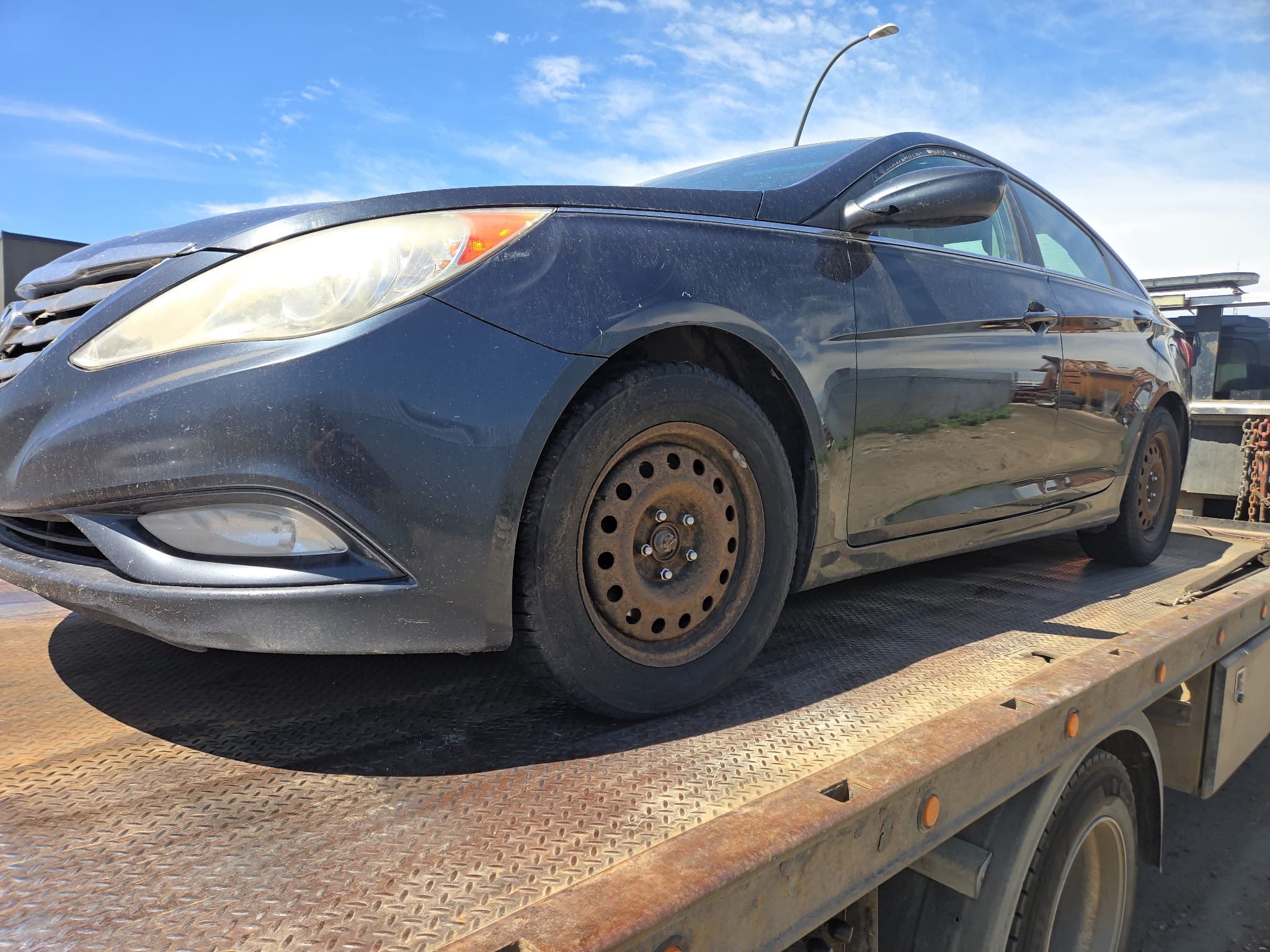
You don't jump-start anything. You don't rent a trailer. You don't call a friend with a truck. A flatbed arrives at your address, whether the car has been immobile for six months or six years. Same-day service is often available if you call early enough, and next-day is standard across Calgary.
If your vehicle won't move at all - a genuinely dead engine, seized brakes, no wheels - that's not a problem worth mentioning twice. Read how to sell a non-running car in Calgary if that's your situation specifically, because there are a few extra details worth knowing about valuing a vehicle that can't be driven.
Step 3: Getting Your Paperwork and Vehicle Ready
Between booking and pickup, handle three things.
- Locate your Alberta registration. This is your proof of ownership and the buyer legally cannot take the vehicle without it. Lost it? Any Calgary registry office can issue a replacement, usually same-day.
- Empty the car completely. This step gets rushed more than any other, and it's the one people regret. Garage door openers, spare house keys, dash cams, GPS units with your home address stored, insurance documents with your policy number - all of it needs to come out. A full pre-scrapping belongings checklist covers every compartment worth checking twice.
- Remove your licence plates. In Alberta plates belong to you, not the vehicle. Unscrew them before the truck arrives.
Step 4: Pickup Day and Payment
The driver arrives and does a short visual inspection - typically five to ten minutes. They're confirming the vehicle matches your description: right model, damage as described, engine present, catalytic converter intact.
Assuming everything lines up, the quoted amount is paid on the spot. Cash and e-transfer are both standard in Calgary. You sign the ownership transfer, hand over the registration, and the car is loaded onto the flatbed.
One rule worth memorizing: payment happens before or at the moment the vehicle leaves. Any buyer asking you to release the car and wait for payment later is not one you should be dealing with.
Step 5: After the Truck Leaves
Your car heads to a licensed Alberta recycling facility where fluids are drained, usable parts are pulled for resale, and the remaining shell is crushed and processed for its metal. Roughly 80% of a vehicle gets recycled. The full journey is covered in what actually happens to your car after it's scrapped - it's more involved than most people expect.
Meanwhile, you have one task left: call your insurer. Continuing to pay premiums on a vehicle that no longer exists is pure waste, and you're likely owed a prorated refund. Timing matters here, so review how to cancel insurance after scrapping a car in Calgary before you dial.
What Determines How Much You Get
Payouts in Calgary generally reflect four variables:
| Factor | Why It Matters |
|---|---|
| Curb weight | More metal means more scrap value |
| Make and model | Drives demand for salvaged components |
| Catalytic converter | Contains platinum, palladium, rhodium |
| Alberta scrap metal rates | Commodity pricing shifts month to month |
A compact sedan typically lands in the lower range. Full-size trucks and SUVs sit considerably higher, purely on weight and parts demand.
Why This Beats the Alternatives
Listing a dead car privately means fielding lowball offers from strangers for weeks, then explaining repeatedly that no, it doesn't start, and no, you can't deliver it. Donating means paperwork and no cash. Leaving it parked means bylaw complaints and continued insurance charges on an asset that's depreciating daily.
Cash for cars is one phone call, one visit, and one payment. For most Calgary residents sitting on an unwanted vehicle, that's the entire calculation.